The two most common offences prosecuted in the courts in Ireland to do with drink and driving are sections 49 and 50 of the Road Traffic Act, 1961.
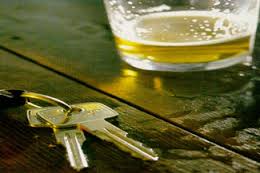
Section 49 deals with driving or attempting to drive a vehicle while under the influence of an intoxicant which includes both alcohol and drugs.
This is commonly known as “drunken driving”.
It is important to note that the power of arrest in respect of this charge, without warrant, arises under under section 49(8) and provides that the Garda must form an opinion that the driver is committing an offence or about to commit an offence under section 49.
NOTE: The law has been updated and changed significantly since I wrote this article. Please read my updated (in 2017) article about drink driving in Ireland.
Drunk in charge-Section 50 Road Traffic Act, 1961
Section 50 of the Road Traffic Act, 1961 deals with the offense commonly known as “drunk in charge”. This offence is committed if you are in charge of a vehicle in a public place with intent to drive or attempting to drive.
To be successfully prosecuted for the offence of being “drunk in charge” under Section 50 of the Road Traffic Act, 1961) it is necessary to prove
- The offence occurred in a public place
- That the accused person intended to drive or intended to attempt to drive the car
- That the accused person was in charge of the vehicle.
There is a presumption in law that the accused person intended to drive or intended to attempt to drive the vehicle; it is up to the accused person to prove to the contrary.
Whether the accused person was attempting to drive in the eyes of the law will depend on the facts of each case but there is an important Supreme Court case, DPP v Byrne (2001, unreported) where the accused person was held to be in charge with intent to drive under section 50.
In this case the accused
- Was in the driver’s seat
- Was actually asleep
- Was pulled in to the hard shoulder
- The keys were in the ignition, turned two clicks.
As in the previous offense of “drunken driving” the Garda can only arrest you after he has “formed the opinion” that you are committing or about to commit an offense under section 50. The Garda does not have a general power of arrest.
It is notworthy that to prove a section 50 offence the Garda will not have to prove that you were driving, only that you were in charge of the vehicle.
The concentration of alcohol required to prove this offence is an excess of alcohol in the blood of 80 milligrammes of alcohol to 100 millilitres of blood. There are other tests in relation to testing breath (35 microgrammes of alcohol per 100 millilitres of breath) and urine (107 microgrammes of alcohol per 100 millilitres of breath) .
The sample must be taken within 3 hours of the alleged commission of the offence.
It is important to note that the opinion of the Garda in order to arrest you lawfully must be a reasonable one and must be formed after ascertaining and considering the facts.
For the arrest to be lawful, there are 2 factors required:
1. The driver must be informed why he is being arrested in plain language
2. The driver must be informed that he is no longer at liberty.
Mandatory breath testing
Section 4 of the Road Traffic Act, 2006 provides for mandatory breath testing and covers the situation of the setting up of a check point by the Gardai.
Where a check point is validly set up by the Gardai the Garda does not have to form an opinion beforehand-he is entitled to request a breath test from you by virtue of the setting up of the check point.
If there is no check point set up then the Garda can request a breath specimen from you under section 12 of the Road Traffic Act 1994 if the Garda has formed an opinion that you have consumed intoxicating liquor or have been involved in a collision or have committed or about to commit and offence under the Road Traffic Acts.
Obligation to provide a sample after arrest
Under Section 13 of the Road Traffic Act 1994 a driver can be arrested and brought to the station for driving and being in charge of a vehicle while under the influence of an intoxicant.
Once this happens you are obliged to provide a blood or urine sample to a designated doctor provided by the Gardai.
Under section 14 you can be requested to accompany the Gardai to the station to provide a sample if the Garda is of the opinion that you are under the influence to the extent that you are incapable of having proper control of your vehicle.
If you fail to accompany the Garda you are guilty of an offence and can be arrested without warrant.
Drink Driving Disqualifications and Penalties
Drink driving convictions result in a mandatory, consequential disqualification from driving.
The Court does not have any discretion into disqualification but may in addition impose a fine and/or imprisonment and a contribution towards the costs of the Bureau which provides analysis of samples and specimens of drivers who have been bagged or otherwise tested.
The length of disqualification will depend on whether it is the driver’s first offence or not and the level of alcohol in the breath, blood or urine sample.
Here are the disqualification periods for the various levels of blood, breath and urine tests of alcohol:
Disqualification periods for drink driving in Ireland
Blood alcohol level
81-100 mg alcohol per 100 ml of blood leads to disqualification period of 1 year for a first offence and 2 years for a second offence.
101-150 mg alcohol per 100 ml of blood leads to disqualification period of 2 years for a first offence and 4 years for a second.
Greater than 150 mg alcohol per 100 ml of blood gives rise to 3 years for a first offence and 6 years for a second.
Breath alcohol level
36-44 mcg of alcohol per 100 ml of breath leads to disqualification of 1 year for a first offence and 2 years for a second;
45-66 mcg of alcohol per 100 ml of breath leads to disqualification of 2 years for a firts offence and 4 years for a second;
Greater than 66 mcg of alcohol per 100 ml of breath leads to disqualification of 3 years for a first time conviction and 6 years for a second
Urine alcohol level
108-135 mcg of alcohol per 100 ml of urine leads to disqualification of 1 year for a first offence and 2 years for a second;
136-200 mcg of alcohol per 100 ml of urine leads to disqualification of 2 years for a 1st offence and 4 years for a second;
Greater than 200 mcg of alcohol per 100 ml of urine leads to disqualification for 3 years and 6 years for second and subsequent convictions.
Any disqualification and penalty comes into effect 14 days from the date of conviction. If you appeal the conviction then it will be adjourned until your appeal is heard and you can continue to drive.
However if you lose your appeal you may receive a tougher sentence.
Breath, Blood and Urine Samples-The Procedures
The procedures adopted after the provision of a breath, blood or urine sample when faced with a prosecution under the Road Traffic Acts is vitally important. A break in the chain of evidence or failure to follow the correct procedure by the Gardai or the Bureau may lead to a collapse in the prosecution case.
Breath samples
The procedure covering breath samples is set out in section 17 of the Road Traffic Act, 1994 (amended by the Road Traffic Act, 2006).
The Gardai must obtain two specimens of your breath, produce two identical statements from the intoxilyser machine and get the accused person to sign both analysis statements. One copy is retained by the Gardai and one is given to the accused person.
Blood and urine samples
Section 18 of the Road Traffic Act, 2004 (as amended by 1(1)(e) of the 2006 Road Traffic and Transport Act, 2006 sets out the procedure for taking urine and blood samples.
A designated doctor or nurse will take a sample of blood or urine, divide it into two parts, put them into 2 containers and seal them. One is sent to the Bureau for analysis and one offered to the accused person who has a choice as to which container he retains.
The sealed container to be sent forward to the Bureau for analysis must be sent as soon as practicable together with the prescribed form completed by the doctor or nurse.
There is a presumption in law that the necessary procedures have been followed by the doctor or nurse unless this presumption can be rebutted by the defence.
Procedure at the bureau
Section 19 of the 1994 Act deals with the procedure at the Bureau when it receives samples taken. The Bureau certifies the accuracy of specimens taken and it must forward to the Gardai “as soon as practicable” a completed certificate in the prescribed form and a copy to the accused person.
Drink Driving Limits in Ireland
The drink driving limits in Ireland are set out below together with the drink driving penalties and disqualifications.
Blood alcohol level limit
The maximum blood alcohol level is 80 milligrams of alcohol per 100 ml of blood.
Breath alcohol limit
The breath alcohol limit is 35 microgrammes of alcohol per 100 ml of breath.
Urine alcohol level limit
The urine alcohol level limit is 107 mg of alcohol per 100 ml of urine.
You can check out the drink driving penalties for drink driving in Ireland by clicking on the link and learn more about drink driving laws and road traffic offences generally on the road traffic offences page.
It is important to keep in mind that in addition to the disqualification periods (which are mandatory, not discretionary) the Court has discretion to impose fines and/or a term of imprisonment on you as well as an award of costs to the Bureau which certifies the accuracy of specimens sent to it by the Gardai.
STOP PRESS: There have been changes made to the drink driving limits in Ireland in October, 2011 and there are new drink driving limits.
The table of disqualification periods will tell you what the period of disqualification will be depending on
1. Whether it is a first offence or not
2. The amount by which you have exceeded the limits for breath, blood or urine with your concentration of alcohol.
New Drink Driving Limits in Ireland
New drink driving limits came into effect in Ireland from the 28th of October, 2011 and are now set out in the Road traffic (No. 2) act, 2011 and the Road Traffic Act, 2010.
(Always consult with a solicitor if you are charged with a drink driving offence)
The main changes are that the 80 mg per 100 ml of blood limit has been reduced to 50 mg and there will be a special lower limit for learner drivers of 20 mg per 100 ml of blood.
This lower limit will also apply to anyone stopped by the Gardai and who does not have their driving licence with them. In addition the lower limit applies to private cars towing a trailer, taxi drivers and tractor drivers.
The Road Traffic (No. 2) act, 2011 also made a significant change in allowing a “second chance” situation to arise. If you are slightly over the 50 mg of alcohol per 100 ml of blood limit the Gardai have the power to impose an on the spot fine of €200 and impose three penalty points.
Prior to this act the driver would always have to be prosecuted in the District Court and face an automatic disqualification of 12 months if convicted.
This second chance/marginal breach of the limit can only be relied upon once in a three year period but a significant change is that you will not have a conviction marked against you at this lower level.
Summary
Experienced Drivers with 20 mg-80 mg will be fined €200 and 3 penalty points.
Drivers with 80 mg to 100 mg of alcohol will be fined €400 and disqualified for 6 months (the previous minimum was 12 months on conviction) and you will have a conviction.
Drivers over 100 mg of alcohol will be brought to Court as per the previous situation with a minimum disqualification of 12 months and fine of up to €5,000.
In addition, specified drivers including learners, taxi drivers and those driving a tractor or pulling a trailer will be subject to the penalties below:
Over 20 mg but less than 80 mg will lead to 3 months disqualification and a €200 fine.
If you find yourself in difficulty in relation to drink driving you would be well advised to obtain a solicitor or professional legal assistance.
Appealing a conviction for drink driving
You may appeal a conviction for drink driving within 14 days of your conviction.
If you do so your conviction will be adjourned until the hearing of your appeal.
However if your appeal at Circuit Court level is unsuccessful then you may receive a harsher sentence.
Update 2017
NOTE: The law has been updated and changed significantly since I wrote this article.
Please read my updated (in 2017) article about drink driving in Ireland.